
The Mistake Most People Make First
The opener doesn't respond, so the first move is usually ordering a new one online or calling around for a full replacement. It's tempting because an unresponsive opener feels like the whole unit has died, and a new system seems like the simple fix. But in a large share of these calls, the motor and logic board are fine. The problem is something smaller: a dead battery, a tripped breaker, or a dirty sensor lens. Replacing the opener before checking those things usually means spending money on a new unit while the real problem, something cheap and easy, goes untouched.
What You're Likely Seeing
- Nothing happens at all — no light, no hum, no click, whether you use the remote or the wall button.
- The motor hums but the door doesn't move — power is reaching the unit, but something downstream isn't engaging.
- The remote works inconsistently — fine from the wall button, unreliable from the car or across the garage.
- One control works but not the other — remote responds, wall button doesn't, or the reverse.
- The opener light blinks in a pattern and the door won't budge, which usually points to a safety sensor issue rather than the remote itself.
The Order a Technician Checks Things
1. Power to the Unit
Before touching remotes or sensors, a technician confirms the opener is actually getting power. Check that the unit is plugged into the outlet, and check your breaker box or any GFCI outlet in the garage — these trip easily during storms or after a power surge, both of which are common here when hurricane remnants or summer thunderstorms roll through. If the outlet is dead, reset the breaker or GFCI and see if the opener lights up.
2. Remote Batteries and Contacts
This is the most common culprit and the easiest to fix. Replace the batteries, and while you're in there, check for corrosion on the contacts — humidity in this area can cause a slow buildup even in batteries that aren't dead yet. A fresh set of batteries and a wipe of the contacts solves more of these calls than anything else on this list.
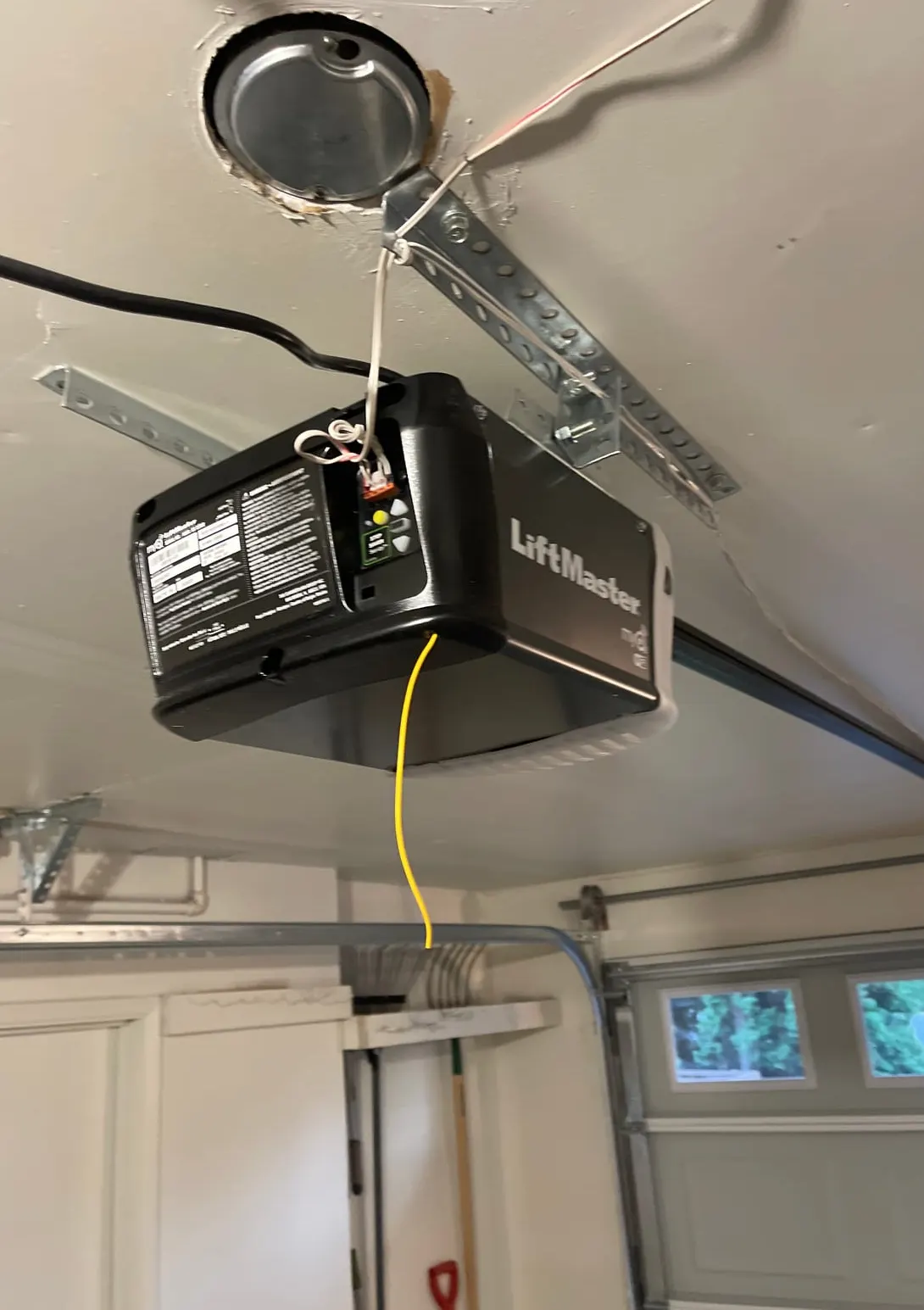
3. The Antenna on the Opener Unit
Look at the opener motor itself for a short antenna wire hanging down. If it's been pushed up, bent, or tucked behind a metal shelf or storage bin, the unit may not pick up a remote signal even though the batteries are fine. The fix is simply letting the antenna hang freely, away from metal surfaces.
4. Lost Programming After a Power Outage
Many openers lose their remote and keypad programming after a power interruption, which is worth checking after any outage from an ice storm or a storm-related surge. If the wall button still works but the remote doesn't, this is a strong possibility. Reprogramming takes a few minutes and the steps are usually printed on the motor unit or in the manual.
5. Safety Sensor Alignment and Cleanliness
The two small sensor eyes near the bottom of the tracks have to be aligned and unobstructed, or the opener will refuse to close the door even if the remote signal is getting through. Garages near pine trees collect pollen film, spiderwebs, and moisture on these lenses more than people expect, and heavy rain can knock the brackets slightly out of alignment over time. Wipe both lenses with a soft cloth and confirm the indicator lights on each sensor are solid, not blinking.
6. Wall Button Wiring
If the wall button specifically has stopped working, the wiring between the button and the motor unit can be the issue, especially in older garages where wires run exposed along the wall. Moisture and the occasional rodent or insect nesting near the garage can both damage this wiring over time. A technician checks for frayed, chewed, or corroded wire and replaces the run if needed.
7. The Circuit Board
If power, batteries, antenna, programming, and sensors all check out, the logic board inside the opener may have failed. Humidity and power surges, both frequent in this climate, are common causes of board failure over the life of an opener. Depending on the age and condition of the unit, this is either a board replacement or a sign it's time for a new opener.
When to Call Wilson Garage Door
If you've checked the easy stuff and the opener still ignores the remote and the wall button, it's time to bring in a technician rather than keep guessing. This is especially true if you suspect sensor misalignment you can't fully correct, wiring damage, or a circuit board that's failed. Our Garage Door Opener Repair & Installation service covers diagnosis and repair of exactly these issues, and if your opener is older and failure-prone, regular Garage Door Maintenance can catch worn components before they leave you stuck outside the garage.
If your garage door opener in the Wilson, NC area is giving you trouble, call Wilson Garage Door for a straightforward diagnosis and a fix that actually matches the problem.